Parasternal long axis
Shows the left ventricle, the aortic valve and the mitral valve side by side.
An echocardiogram uses ultrasound to show how your heart moves and pumps. Our cardiac sonographers capture the images, and a cardiologist sends a report to your referring doctor.

Echocardiography is ultrasound of the heart. It shows your heart moving in real time, so your doctor can check its pumping, its valves and its size without any needles or radiation.
The sonographer moves the probe to a few standard positions. Each position shows a different slice of the heart.
Shows the left ventricle, the aortic valve and the mitral valve side by side.
A cross-section that shows how evenly the heart muscle squeezes all the way around.
All four chambers at once, taken from the tip of the heart.
Measures blood flow, so the cardiologist can see any leaking or narrowed valve.
Your referral tells us which test your doctor wants. Not sure? Upload it with your request and we'll check.
The standard echo, taken through the chest wall while you lie still. It measures how well your heart pumps and checks all four valves.
Doctors often request it for a heart murmur, breathlessness, swelling in the legs or to monitor a known condition.
Images are taken at rest, then straight after you walk on a treadmill. Comparing them shows how your heart muscle copes with extra effort.
It is often used to look for narrowed heart arteries.
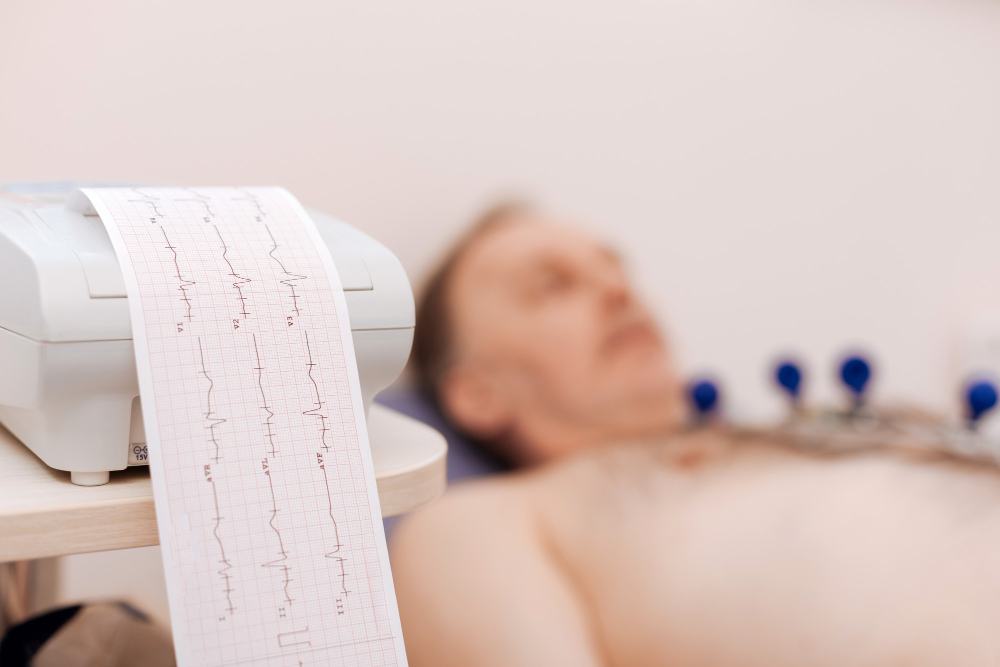
Small sticky pads record the electrical signal of your heart. It checks your rhythm and can show signs of strain or a past heart attack.
A small recorder clips to your belt and records every heartbeat for 24 hours or longer while you go about your normal day.
It helps catch palpitations or dizzy spells that come and go.
Your GP or specialist refers you for the test you need.
Send the form below. We reply within one business day with a time.
Bring your referral and Medicare card. The scan takes 30–45 minutes.
A cardiologist reports the images and sends them to your doctor.
Your report goes to the doctor who referred you. They will explain the findings and what happens next, so book a follow-up appointment with them after your scan.
Bring your questions to that appointment. Writing them down beforehand helps you remember.
*Costs and Medicare.A Medicare rebate applies when your referral meets Medicare criteria. [BULK BILLING OR FEE DETAILS] We confirm any cost before you book.

Paper or electronic, from your GP or specialist.
Needed to process your Medicare rebate.
You'll undress to the waist and get a gown.
Time to check in and fill in a short form.
Ask anything else in the request form. We reply within one business day.
Ask a questionEchocardiography is the technique of scanning the heart with ultrasound. The echocardiogram is the test itself and the images it produces.
Yes. A referral from your GP or specialist is needed for a Medicare rebate and tells us which test to perform.
No. The probe presses gently on your chest and the gel can feel cool. Tell the sonographer if anything is uncomfortable.
A resting echo takes 30–45 minutes. A stress echo takes about an hour.
Yes. A resting echo has no after-effects, so you can drive and return to your normal day.
Send your details and referral. Our team replies within one business day to confirm a time and check your Medicare eligibility.